Condition reporting
Every vehicle that crosses gets the same inspection, in the same order, by someone who did not consign it and does not sell it.
1 · Intake
Vehicle is photographed on arrival before anything is cleaned, moved or adjusted. Odometer is read and photographed in the same pass.
2 · Walk-around
Panel-by-panel exterior assessment with a paint depth gauge. Every reading outside the expected band is recorded, not summarised.
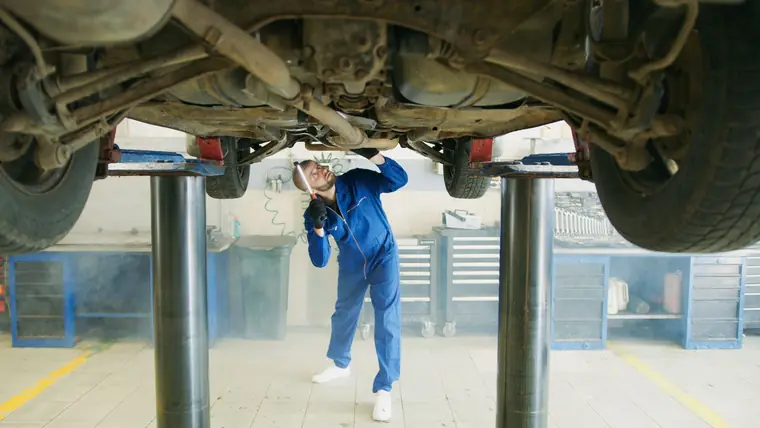
3 · On the lift
Underside, floors, sills, subframes and mounting points. Corrosion is described by location and severity, and anything that limits the assessment — underseal, wax, fresh paint — is named as a limitation.
4 · Cold start and running
The vehicle is started cold and run to temperature. Idle, smoke, noise, leaks and stored fault codes are recorded.
5 · The diagram
Findings are placed on a plan-view diagram with a severity key, so the shape of a car's history is visible before you read a word.
6 · The announcement sheet
Anything that changes what a buyer is buying becomes an announcement, and the announcement sets the light the vehicle runs under.
In our words
Why it is built this way
A condition report is the only reason a stranger will bid on a car they have never driven. That makes it the product, not the paperwork.
The grade is a summary, not the report. A 3.4 tells you roughly where a vehicle sits; the diagram and the announcement sheet tell you why, and those are the parts to read before you bid.
The most useful line in a lot of our reports is the one that says what the inspector could not see. An underseal-treated chassis, a recently painted panel, a car that would not start on the day — each of those limits an assessment, and each is written down as a limitation rather than being graded around.